
Commercial Waste Removal Gipsy Hill: Recycling and Sustainability
Commercial Waste Removal Gipsy Hill focuses on creating an eco-friendly waste disposal area across local business districts and retail corridors. Our approach supports a sustainable rubbish area that aligns with borough policies and helps businesses reduce landfill, lower their carbon footprints and improve resource recovery. This page explains our recycling goals, local transfer facilities, charity partnerships and low-carbon fleet initiatives to make commercial waste collection in Gipsy Hill genuinely greener.Creating a sustainable rubbish area in and around Gipsy Hill requires coordinated action across multiple stakeholders. The local boroughs emphasise source separation—mixed recycling, food waste and residual streams—and we tailor commercial waste removal in Gipsy Hill to mirror this kerbside model for businesses. By separating paper, cardboard, glass, metal and organics at source, commercial premises can dramatically increase recovery rates and reduce contamination of recyclable loads.
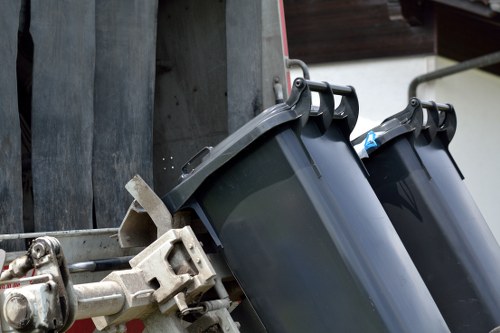
Our Recycling Percentage Target and Timeline
We have set a clear recycling percentage target for commercial collections: a 70% recycling rate for commercial waste by 2028, rising to an aspirational 80% by 2035. This target applies to diverted materials from shops, offices, cafes and light industrial sites across the Gipsy Hill locality. Achieving these targets means improving segregation, increasing reuse and repair activity, and diverting organics and bulky items to appropriate processing streams rather than landfill.Part of reaching a high recycling percentage target is making reuse and redistribution simple for businesses. We maintain active partnerships with local and national charities to ensure items in good condition are given a second life. Partnerships currently include donation routes to organisations such as Emmaus, British Heart Foundation furniture schemes and local community shops that accept surplus stock and gently used fixtures.
Local Transfer Stations and Consolidation Hubs
For efficient, compliant processing we work with nearby transfer stations and consolidation centres. Typical facilities serving the area include licensed council transfer stations and regional consolidation hubs in Streatham and Croydon, along with specialist handling centres for WEEE (electricals), textiles and construction waste. Using these local transfer points reduces journey distances and supports the boroughs' waste separation frameworks.We also operate a materials-first mindset when routing loads from commercial waste Gipsy Hill collections: glass and metals are sent to recycling processors, organics to anaerobic digestion or composting facilities, and mixed bulky goods to refurbishment and donation partners. This reduces unnecessary treatment and ensures higher-quality recycled outputs.
To make the sustainable rubbish area practical at scale, we provide clear on-site segregation guidance for businesses and offer tailored waste audits that identify the best streams for recovery. Our commercial waste removal in Gipsy Hill services include segregated bins for:
- Paper and cardboard
- Mixed recycling (plastics, cans and cartons)
- Glass
- Food and organic waste
- WEEE and batteries
- Wood and construction materials
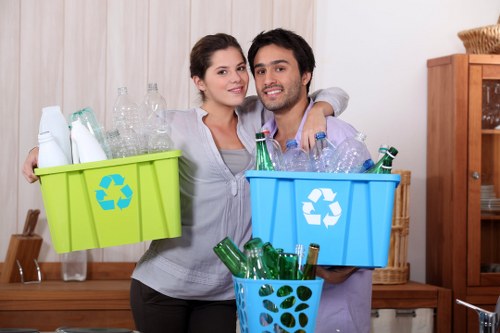 Fleet and logistics are central to lowering environmental impact. We are transitioning our fleet to low-emission vehicles, including electric and hybrid vans for inner-London runs and Euro 6 compliant trucks where zero-emission options are not yet feasible. Route optimisation, load consolidation and off-peak collections further reduce emissions in the commercial waste Gipsy Hill area, helping create a genuinely low-carbon collection network.
 Beyond collection, we champion circular-economy principles: repair, reuse and resource recovery. Our partnerships with charities and specialised processors mean furniture, appliances and surplus retail stock are assessed for donation or refurbishment before being recycled. Where reuse is not viable, materials are sorted to maximise recycling rates and minimise residual waste. These steps help businesses in Gipsy Hill demonstrate responsible waste stewardship.
Training and engagement are part of making a long-term sustainable rubbish area. We deliver simple staff briefings and labelled container schemes so that employees understand what goes where. Behavioural change at the point of disposal is one of the most effective ways to lift overall commercial recycling performance in the boroughs surrounding Gipsy Hill.
Reporting and transparency underpin progress. Businesses receive regular summaries of diversion rates, carbon saved through low-carbon vans and the tonnages passed to local transfer stations and charity partners. These metrics track progress toward the recycling percentage target and provide evidence for sustainability reporting and corporate responsibility statements.
In summary, sustainable commercial waste removal in Gipsy Hill combines clear recycling goals, strong charity partnerships, reliance on local transfer facilities and a growing low-carbon fleet to create an effective eco-friendly waste disposal area. Working together—businesses, processors and community organisations—ensures that the local approach to waste separation delivers environmental benefits, cost efficiencies and a healthier urban neighbourhood for everyone.